
for parents + educators


I’m always a little embarrassed when someone asks me what I like to read. My favourite genre (although I will basically read and enjoy anything) is fantasy, with a particular love of fairy tale re-telling.
I know in general it’s a popular genre, but I like to think of myself as a practical sort of person, and I almost feel like it’s a weakness, that little part of myself that won’t grow up (ok there is probably more than just one small part that hasn’t grown up : )).
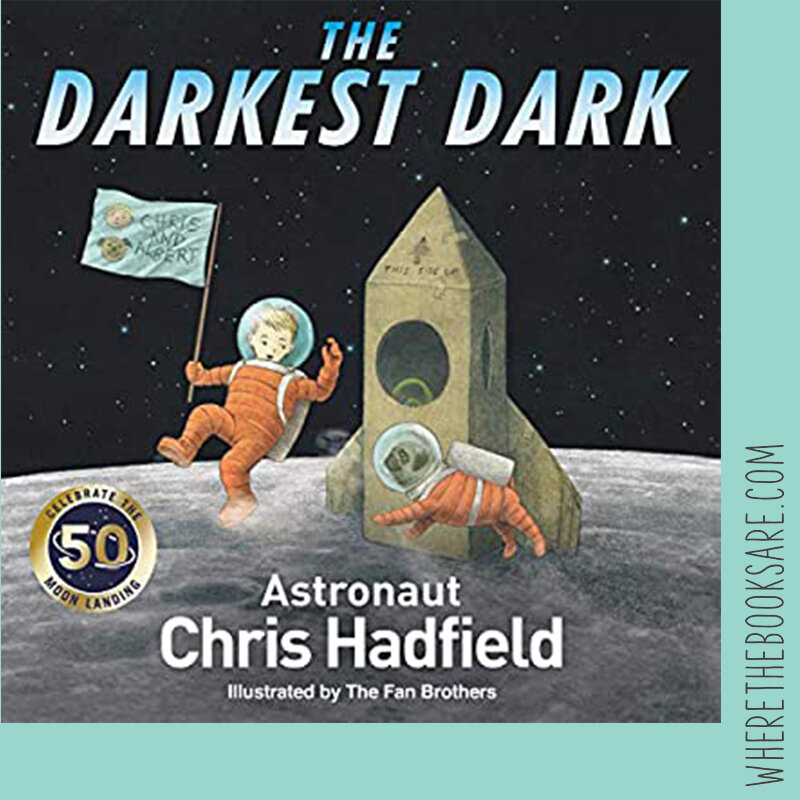
Savannah is off to pre-school this year, and William and Ivy start Kindy. In honour of these major life moments, here's a small collection of books that are lovely to read in the first week or two of school. I hope you find something that feels right for your new (or returning) school kid.
I’m going to read Off to School Baby Duck to all three of our new school kids via Marco Polo this week too. It’s a cute story of a baby duck who is scared to go to school but, predictably, has a good day. It was a favourite for their fathers long ago—mostly out of print now, but full of nostalgia for our family.

The Giver is one of our family’s favourite books—it’s thought provoking and gripping and leaves you with a whole new way of looking at the world.
But it can also be a handy parenting tool. For instance, I found this on our family blog from 8 years ago, and thought I might share it with you:

I recently attended the annual Queensland Childcare Association conference and I was so excited to be going—but my excitement went through the roof when I heard that the keynote speaker was Jackie French, the author of my favourite novel, I think in the world, To Love a Sunburnt Country!
I have always loved Jackie French! Ever since I was little I enjoyed reading—or mainly having read to me—her books. Probably the first one I heard was Stories to Eat with a Blood Plum. I must have been all of three-years-old

Every so often, one of my prep (4 to 5-year-old) students brings me the dictionary, a huge encyclopaedia, or a chapter book akin to Lord of the Rings and requests that I read it to them. The mystery of a chapter book is so enticing: the wonder of what a story with so many words might tell is magical. It is so wonderful to read a chapter book to a child, but to start with Lord of the Rings can often lead to frustration.
However, there are many chapter books that are great for younger listeners! Here's what I look for:

Some really useful how-to's from specialists in their brainy fields + three 'brain' books we've liked a lot—you might find them interesting too....

Sam's little boy Angus is crawling now and his first order of business every day is to crawl on over and wrestle Ivy! Kid wrestling can get a bit wild to nervous adult eyes and the temptation is to call a halt to the whole of it. But there’s a growing consensus that wrestling or roughhousing is not just good for kid’s overall physical and mental health—it’s vital.

Raising children who are immune to the effects of racism is a common, and lofty, goal for many parents. Nurture Shock helps with this and many other parenting ideals. It's challenging but full of new and helpful ideas.
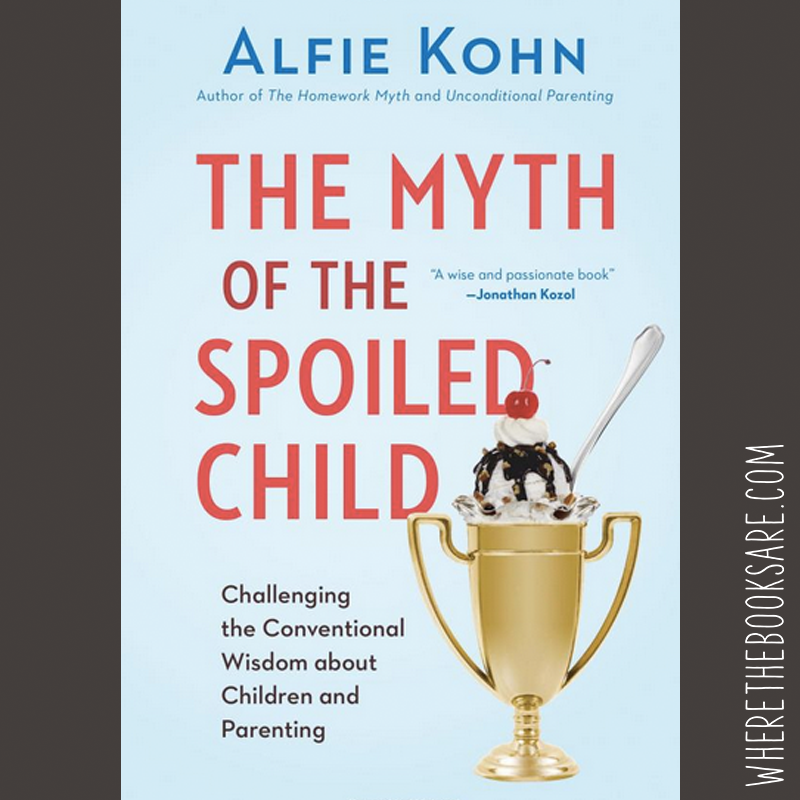
Sometimes, as we lurch from one parenting crisis to another—and from one attempt to be a ‘good’ parent in the eyes of other adults to another, there’s a nagging feeling that something is amiss. In The Myth of the Spoiled Child, Alfie Kohn looks carefully at some of the current sacred cows of child raising, nailing down what is amiss and what we can do about it.

Alfie Kohn’s clarion call is for a ‘working with’ rather than a ‘doing to’ approach to parenting, educating and otherwise interacting with children. Unconditional Parenting is his coalface parenting book. So that we’re ready to try something new as a parent, Kohn sets out the take-home message—via some alarming research about what traditional ‘doing to’ style parenting is, well, ‘doing to’ our children.

Actually I think it’s really ‘kids and parents may be right after all’, because I’ve never met a parent who loves homework. Alfie to the rescue! With evidence that homework fails to accomplish its stated purposes—to raise achievement, teach independence and establish good habits.

When we praise kids—either with the ubiquitous ‘good job’ or using pretty much any other form of praise—we are treading on dangerous ground.





Any book that helps a child to form a habit of reading, to make reading one of his deep and continuing needs, is good for him.